Friday, 19 July 2013

Assignment 4: West Dean

A Sense of Place

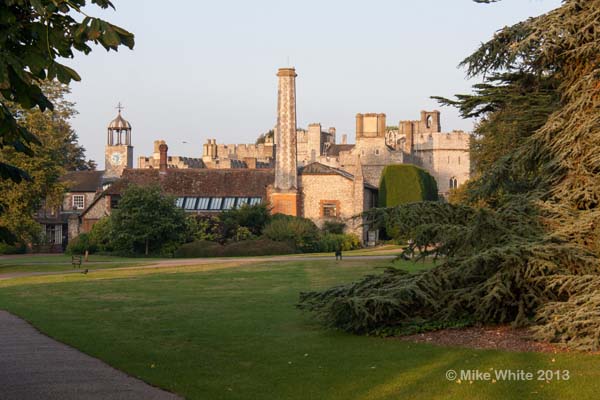
West Dean College

"In 1964, Edward James conveyed his family mansion, art collection and Estate to The Edward James Foundation, a charitable educational trust. The creation of such a trust averted the fragmentation that death duties would have dictated and allowed the materialisation of Edward's vision: creating a community where the Estate supports a college dedicated to the arts and crafts.  crafts. In 1971, Edward James's vision became a reality when the gates of his family Estate were opened under the auspices of West Dean College."
http://www.westdean.org.uk/WestDeanHomepage.aspx

The building is faced in knapped flints and these cause it to shine in sunlight.

This facing material covers the entire exterior of the house.
Rear.

The West wing.

The service buildings and workshops of the East wing.

The enclosed courtyard.

The Setting

 Works of art fill the house and spill out into the surrounding land.


The Lavant river divides the front lawn and house from pasture land.

 The Lavant is a winterbourne, occasionally drying up completely in summer, and an iron fence, hidden in the ha-ha, stops the sheep invading the lawn.

The grounds contain many exotic and interesting trees.  This horse chestnut has never suffered the presence of grazing animals.

Though it has been made into a work of art.
The grounds are open to students and to vistors to the West Dean gardens.

The Studios

The old Orangery is now a workshop:
This group of students is experiencing abstract acrylics.

As part of conversion to an educational establishment, the original building has been extended to provide workshop space.
This roof has been inserted:
Creating a large workshop that can be divided up by partitions:
Individual power sources dangle from the roof.

There are workshops in other parts of the building: Life drawing.
And pottery.
Here, making a pot from slabs of clay is being demonstrated.
While some potters used the wheel, other pots were begun as pinch pots
 and extended by adding coils or rings of clay.
The turntable is an ancient device to enable the potter to produce a symmetrical, round pot without having to move round it.
 
Hanging pre-prepared endpapers for a book-binding course.
 
Abstract in progress.

A finshed piece of work.
 

Services 

An establishment like West Dean has to offer services:
Refectory.
 
Shop for artists' materials.
  
 Maintenance of a big estate like West Dean is a continuing process.
 
"All of the heating and hot water needs of West Dean College (and parts of the village) are met entirely, and on a sustained basis, by using wood fuel grown on the West Dean Estate. The biomass district heating scheme was one of the first, and remains one of the largest of its kind, in the UK." 

Events

It's always a job to make ends meet, and therefore West Dean hosts events through the year.
This group of tipis was used for a most romantic wedding.

 
Most of the events require: 
Tents...
Are erected on the lawn in front of the house.
What a super holly-leaf!
These white tents were erected for the college's recent Fusion festival, intended to raise interest in the work of the college.
Setting up for the Chilli Festival.
Which requires certain essential supplies.
 
Events can involve some of the fun of the fair.
 
But West Dean's primary objective is the teaching of arts and crafts. 

 And it's a beautiful place

Documents


For copyright reasons, photography is not normally permitted in the house.  It contains many art works and curios, including Salvador Dali Kiss sofas and the diver's helmet from which Edward James rescued the surrealist painter.  I applied for permission to photograph in the studios and was issued with a pass.
 
I also produced a Model Release form, which people in the studios completed for me:
 

The Assignment

 I've visited West Dean many times and am familiar with it and the surrounding area.  The plan for the project specified three phases: the building and its setting; the workshops, students and tutors; the other activities, and I have stuck fairly closely to this.  I had a week to complete the photography but found a day's photography very tiring, so I take days off for rest and relaxation.
 
I was fascinated by the potters, who were going to do a Raku firing later in the week and would have liked to spend more time with them.
Though I did manage to take a picture of the outdoor kilns being used.
 
I have visited, but not included: the popular West Dean gardens; the Parish Church of St Andrew, West Dean; the village of West Dean; the substantial West Dean estate; the Goodwood (horse) racecourse, which lies beyond the hills at the front of the house.
 
A few of the photographs above result from earlier visits, and I can see in them how much I have developed as a photgrapher in this course.  There are lots of better things I could have done with those beer barrels!
 
I've learned a lot: a project like this requires not just planning and preparation. It needs discipline and sensitivity to the condition of both photographer and subjects. Both can become tired by the intensity of the process, and need a rest. I have to be careful not to wear out myself, or my welcome. People working together tend to form close groups, and the photographer can become regarded as an intruder, and his presence as oppressive.

I hope that my next project will be informed by all I've learnt so far.

Tuesday, 2 July 2013

Fiddling In Photoshop

These are the Shrewsbury Lasses, Morris dancers, performing in Shrewsbury.  I moved round and tried several angles, but there was always background clutter.  One photographer addressed this issue by holding his camera up on a monopod, taking overhead shots, but I doubt if this removed all the clutter and it's an odd viewpoint.  I decided to see what I could do in Photoshop.  Here's my original photograph.
The worst distractions are the yellow coat, left; the burgundy coat, centre; the lilac cardigan, right; and the To Let sign.  I disregarded the two photographers, left.  The obvious answer to the cardigan is cropping, but that was the least problem.  I tried desaturating and darkening them:
The yellow coat still stands out; a most odd, unnatural mustard.  It's clear something's been done to it.  I desaturated them completely:
The horrible coat's now off-white and passable, I suppose.  I burned it darker:
And it looks peculiar again.  I decided on a different approach: Spielberg's girl in the red coat.
And, with the accordion player:
And, cropped to A4, removing the cardigan and litter bin:
However, I think the bin needs to be there, to anchor that corner:
...And balance the one by the accordionist.  The photographers are a little obtrusive, but they fill the gap between dancers and musician.
 
I then looked at cropping just the dancers.  Working with an earlier version:
But the To Let sign is obtrusive.  I removed it:
And the space top right is now too big; it draws attention away from the dancers, allowing the viewer's attention to leak out.  I hadn't realised the sign had a useful function.  Here it is, darkened and with reduced contrast, on the version with a monochrome background:
I suppose I could darken the sky...
I think that's it.

There are still faults, stemming from the original photograph.  Primarily the shop lettering and the clutter.  It would have been nice to preserve the dancers' shadows in the crop.  I guess the main lesson re-learned is that a little time behind the camera can save an awful lot in front of the computer.

Tuesday, 25 June 2013

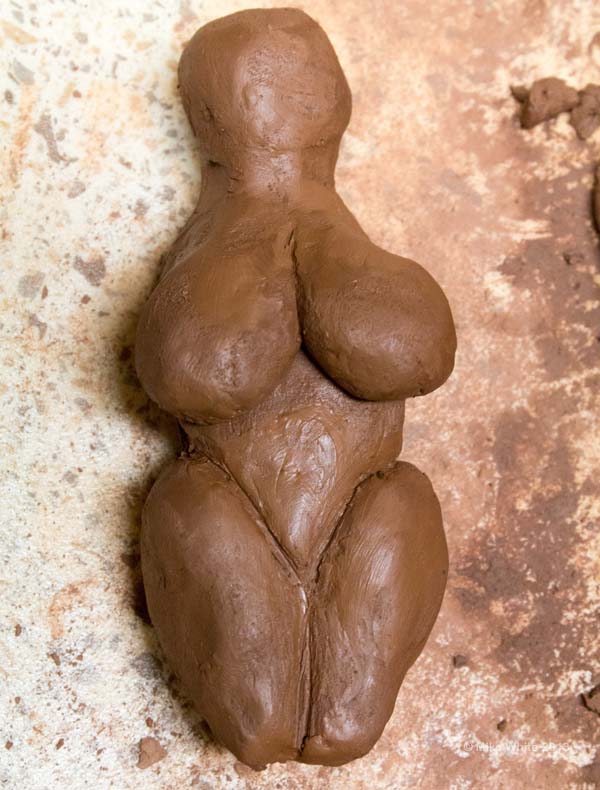
Prehistoric Pottery

We attended a Prehistoric Pottery workshop at Severn Gorge Countryside Trust.  The photographs I took were partly in preparation for my next OCA assignment, and fitted in well with some of the photographs I took for that (not yet processed/posted).

 We made pinch pots, moulding the clay with our fingers, then added rings or coils of clay to extend them.  Above, a ring of clay is being joined onto the body of the pot.

Here's a pot at a later stage.  The perforations here imitate those of some ancient pots.  Their purpose is not known, but if the pot is filled with lighted grass, air rushes in through the holes and a narrow, hot flame comes out of the top, which could be used for jewellery making.

 A more conventional pot being decorated.  Curiously, there is no representative art on British pots of this period.  There are theories to account for this...  Since pottery is fragile, then its destruction might destroy the 'soul' of the thing depicted?

Pit Firing
Here are some pots that were prepared earlier and dried being fired.  A fire is built in a pit and when there are lots of ashes, a hollow is scraped in the middle for the pots.  The temperature is gradually increased, to drive off the remaining water slowly, to avoid it flashing into steam and blowing the pots apart.  The pots are not covered until they're hot enough for the water to have evaporated.  The test for this is to spit on a pot; if it flashes to steam, the pot's hot enough.

The pots are covered using a lot of bark, which produces ashes, useful as an insulator. 
 
More fuel is added.
 
 The temperature rises to 700 degrees.

The fire has to be refueled to keep it hot for an hour or two, to ensure the pots are fired right through.  If they're not fully fired, the unfired clay will become soft as soon as the pot's wet.
 
 When the fire's been burning for long enough, it's allowed to die down, leaving the pots covered in a layer of ashes to insulate them and allow them to cool slowly.  They must be protected freom thermal shock to stop them cracking.

 
The impatient potter can sneak a look at the pots, but must cover them back up soon, to avoid thermal shock.  The pots are allowed to cool gradually in the ashes, referably overnight.

Of course, you don't just have to make pots.
 

Wednesday, 5 June 2013

Motion Blur

I'd not tried this seriously before.  Isn't it fun!

To get useful amounts of blur requires a longish exposure and movement across the sensor plane.  Movement is less easy to achieve when the subject is approaching or retreating.

Without a tripod - cumbersome and likely to cause an obstruction on the street - a stable horizontal or vertical platform is required.  I decided a table in the window of Shrewsbury coffee house would be ideal, but I had to hurry down Castle Gates to get ahead of these men in high-visibility clothing. Exposure 1/8 second.

I ordered a cappuchino and settled in ambush.
I like this apparently imminent collision outside the Bull's Head.  Shame about the foot of the man on the left, just cropped too much.  Exposure 1/25 second.

That's bettter.  An effect that I hadn't anticipated is that walking involves one leg keeping relatively still while the other moves.  Duh.
Here there are two images of the right leg of this fast walker, and the shadow of a third.
I'm very fond of that wonky window.

This girl texting caught my eye, and luckily a train had just come in to the station down the hill.  Exposures all .6 of a second.
 There's a reflection on the cafe window here, but unless one sees it in more than one shot (as here!), it's not obtrusive.

 Here, cropped, is my favourite. 
The walkers seem to be bustling aggressively up and the window reflection emphasises this, yet the texter calmly ignores them.

I learned a bit about setting up the camera for this work.  I used Live View to lock up the mirror and enable me to see what I was getting, switched to manual focus to reduce delay and movement.  I tried a remote shutter release, but discovered that the motion of the shutter rocked the camera, so I had to hold it down to the table when shooting, so I may as well press the shutter release myself.  Exposures ranged from 1/25 to .6 of a second, achieved with ISO 100 and apertures f22-f29.


Single Figures

I'm finding it difficult to work on this section of the course because there seems no particular point; it's a collection of different things.  However, it's been challlenging to reduce the impact of people, or at least their size in the frame.  I'm thinking more about the use of colour and monochrome, too.

Here, amid the drama of this boat-wash at Brighton Marina, the cause of it all isn't immediately apparent.  If I could have got the shot without the intervening boat parts, I would have done, but I think the clutter in the shot helps show the character of the place better than a perfectly clear one would have.  Colour would add little, black and white helps the drama.

Also in Brighton, this time in the Museum.  Security personnel often stand here and watch.  I like the lampshade and the 'upturned boat' structure of the roof, neither of which command this watcher's interest.  This would work in black and white, but I liked the way the warm colours went together.

Blackwell, in Cumbria, is a beautiful Arts-and-Crafts house, uncluttered by artefacts and paintings as most great houses are.  Most of the surfaces are wood; its warmth and beauty would be lost in monochrome.  I had a great time, exploring and hunting.
 Although it's a big house, it has a homely feel; one could move in and live comfortably here.  This man appears to be taking the cosy welcome too far.
 Corridors run the length of the house on both floors.  They provide places to ambush visitors. 
In these shots I'm trying to show the character of the place but introduce a sense of unease when a second look reveals a fragment of human presence.


A gardener takes a rest at Church Beck, Coniston.  I like the sunlit garden against a dark and threatening sky.  This shot has to be in colour because of the similar tones.

The Print Shop at Yale College, Wrexham, is full of lovely heavy old machinery.  As a visitor, I felt I shouldn't interfere, but now wish I'd shut that cupboard door on the left.
Straightening the perspective on this shot has cropped the leg off the big press.  I need to leave room for it...
Or shoot straight and level in the first place.  Here, the lady eating her lunch in contravention of the rules, is partly obscured.