Showing posts with label process. Show all posts

Thursday, 19 December 2013

Random Readings

Snowdon

"I like to direct my subjects and tell them exactly what to do.  It is not always a matter of making people feel totally at ease.  Often the only way one can break through someone's prepared face is to make them slightly uncomfortable, physically or mentally.  Sometimes people can be awkard or ill at ease in a way that expresses themselves better than when they are relaxed.  I may, perhaps, ask them to hold a pose for longer than is natural, or I make a remark about the sitter or their work that surprises them, and then watch for their immediate reaction.  On the other hand, I sometimes ask someone to move fractionally, not because I know what I want them to do, but simply because I do not like what I'm seeing and if the person moved I might like it more.  Only when things are going badly do I use the tactic of talking; it is a conscious and artificial device and I only listen to what is said in the hopes that an idea will come out of it; sometimes I leave the sitter alone for a few minutes to change the mood."
Snowdon, 1984. Sittings 1979-1983. Paperback. London. Wiedenfeld & Nicholson

How Fictional are Photographs? by Colin Graham

“Exploring the connection between the literary and the photographic can end up turning on two related paradoxes.”
1.    The notion ‘fiction’ tries to split photography between the real and the fictional.
2.    The photograph is an instant, whereas the literary tells a story that takes place in time.  Yet a photograph can imply a story and writing can describe an instant.  We read photographs in the context of the photographs and stories that have gone before.

A photograph is not the subject, but a trace of the subject.  The trace implies the subject, which existed within time and is the result of some passage of time.  Yet we see the image first then infer the subject so the normal chronology is reversed.  “Photographs … are not the thing they purport to be, and come before the thing they purport to come after.”
 
The article contains sentences complicated by a Roland Barthes-ian parentheticality:
"This doubled narrativity is a useful way to think, askew, of the fictionality of the photograph, so that we ask not if it mirrors reality, or if its chance of reflecting a truth is perverted by the power which produces or distributes the image, but instead we recognise this backwards-unravelling story which is in every photograph, as it appears, now, to show us then."
Graham, C., 2013. How Fictional are Photographs? Source, The Photographic Review, Summer 2013, 75, pp.40-41

Lee Miller on Portraiture

"She dislikes having any friend come along with her clients because, she explains, 'They always give a person and "audience complex", or make him or her wear a "gallery smile", and both are unnatural."
"And a good photograph is just that, to catch a person not when he is aware of it but when he is his natural self."
Article first published in the Poughkeepsie Star, 1/11/1932.

Diane Arbus on Photographs

"They are the proof that something was there and no longer is.  Like a stain.  And the stillness of them is boggling.  You can turn away but when you come back they'll still be there, looking at you."
March 1971.  Probably in "Diane Arbus", 1972, New Yourk, Aperture.

Tuesday, 25 June 2013

Prehistoric Pottery

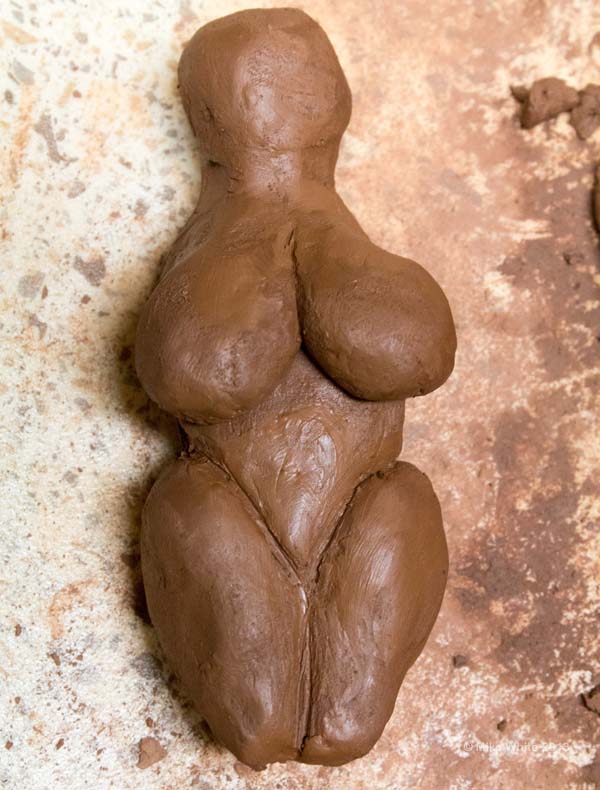
We attended a Prehistoric Pottery workshop at Severn Gorge Countryside Trust.  The photographs I took were partly in preparation for my next OCA assignment, and fitted in well with some of the photographs I took for that (not yet processed/posted).

 We made pinch pots, moulding the clay with our fingers, then added rings or coils of clay to extend them.  Above, a ring of clay is being joined onto the body of the pot.

Here's a pot at a later stage.  The perforations here imitate those of some ancient pots.  Their purpose is not known, but if the pot is filled with lighted grass, air rushes in through the holes and a narrow, hot flame comes out of the top, which could be used for jewellery making.

 A more conventional pot being decorated.  Curiously, there is no representative art on British pots of this period.  There are theories to account for this...  Since pottery is fragile, then its destruction might destroy the 'soul' of the thing depicted?

Pit Firing
Here are some pots that were prepared earlier and dried being fired.  A fire is built in a pit and when there are lots of ashes, a hollow is scraped in the middle for the pots.  The temperature is gradually increased, to drive off the remaining water slowly, to avoid it flashing into steam and blowing the pots apart.  The pots are not covered until they're hot enough for the water to have evaporated.  The test for this is to spit on a pot; if it flashes to steam, the pot's hot enough.

The pots are covered using a lot of bark, which produces ashes, useful as an insulator. 
 
More fuel is added.
 
 The temperature rises to 700 degrees.

The fire has to be refueled to keep it hot for an hour or two, to ensure the pots are fired right through.  If they're not fully fired, the unfired clay will become soft as soon as the pot's wet.
 
 When the fire's been burning for long enough, it's allowed to die down, leaving the pots covered in a layer of ashes to insulate them and allow them to cool slowly.  They must be protected freom thermal shock to stop them cracking.

 
The impatient potter can sneak a look at the pots, but must cover them back up soon, to avoid thermal shock.  The pots are allowed to cool gradually in the ashes, referably overnight.

Of course, you don't just have to make pots.
 

Thursday, 30 May 2013

Showing My Workings

In the study of Mathematics, it's expected that one will show one's workings, to demonstrate the method by which the result was obtained and to allow the validity of that result to be checked.  The photographic equivalent is the contact sheet. 
It's been pointed out to me that my previous post suggested that I'd followed Winogrand and Parr and had deliberately set out to emulate their work.  I was previously aware of their photographs and had already remarked the similarity between their two images and my attraction to them.  In taking my photograph I was certainly informed by this, but its genesis was the seeing of the opportunity, not the setting up of the shot.
Frankie Lynn, burlesque performer and proprietrix of Franki Lynn's Emporium, was using natural light coming through the window to make up the models she'd brought to display the range of clothing and accessories she sells.  I thought there this was opportunity to take some useful shots, though the strong light that was helping Frankie gave me a big range of light levels to cope with.  I decided that I could afford to lose what was going on outside. 
As is my practice, I took a couple of photographs and then requested permission to take more.  I asked the models to carry on with what they were doing.  They were aware of the camera, and in some shots are looking at it.  I decided it would be intrusive if I tried to tidy the table in front, so the handbag, spare lens and water bottle remain.  The lens isn't mine; the owner put it there in the course of my little 'shoot' and it didn't register with me at the time.
Here are some of the photographs I took:
 
Here two of the models are concentrating on the make-up of a third, while the model on the right is checking her own make-up in a very stylised way. 
 
A crop removes the ugly chairs:
But I liked the image mainly because of the model on the right; her focus and self-absorption seem total. I rejected a similar shot because she was obscuring her face with her hand.
Here she is on her own, cropped from the above.
 
The focus changed as Frankie checked another model's make-up:
 Here two models are looking at the camera; the one on the right is consciously posing.  I rejected a similar shot where one model had her eyes shut.  Incidentally, the [160] photographs I took in the day show very low incidence of shut-eye, which I attribute to the confidence of the models and the fact that most of the images were unposed.  However, I didn't like this photograph; with the mixture of posed and unposed, aware and unaware, it doesn't seem balanced. 
 
Here's the photograph I like best.  The burlesque artist Mysti Vine had joined the group, and was talking, apparently to Frankie, though she's distracted, looking off left.
Everyone is animated, yet unconnected with each other.  I like that a lot.
Maybe there's a philosophical point to be made.  It's certainly something to consider when composing my artist's statement!
 
And here it is, with a little more post-production work, to increase contrast and remove distracting lettering from the bottle and the otherwise attractive lamp shade.